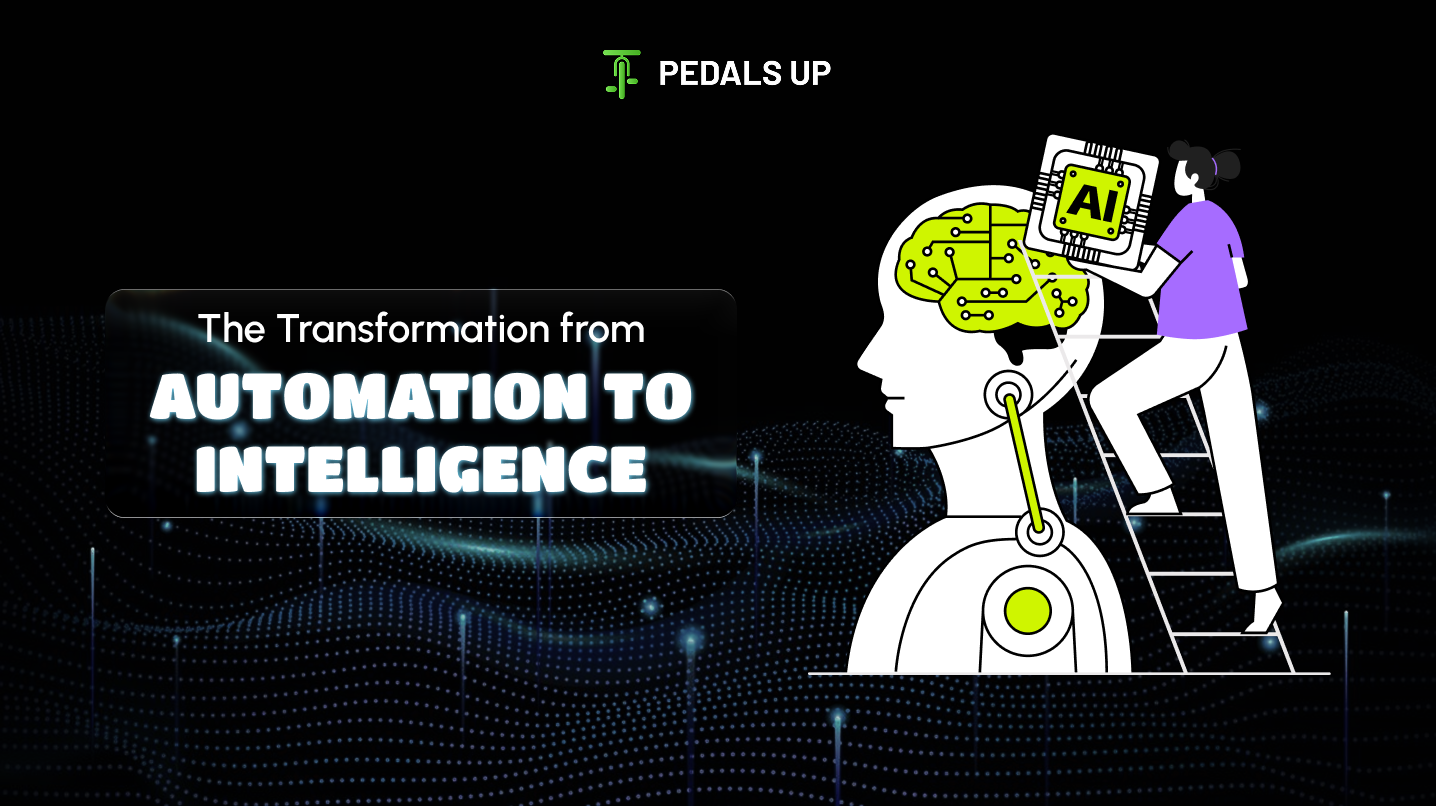
The Transformation from Automation to Intelligence
For years, companies have used automation to automate repetitive work. But conventional automation software only follows rules programmed into it; they don’t think, learn, or get better with age.
That’s no longer the case.
Based on McKinsey, organizations implementing AI-based automation are gaining up to 40% greater operational performance and considerable cost savings when compared to rule-based technology. This productivity boost is fueled by Enterprise AI Agents, the next generation in intelligent automation.
These agents don’t simply run commands; they analyze data, make choices, and learn constantly, bringing in a new era of enterprise transformation.
What Are Enterprise AI Agents?
Enterprise AI Agents are autonomous, AI-driven systems that perform complex business operations without constant human intervention. Built on large language models (LLMs) and machine learning, they can:
- Understand natural language instructions
- Interact with multiple enterprise systems (ERP, CRM, etc.)
- Make data-driven decisions in real time
- Learn and adapt to business changes
In simple terms, they function as digital employees capable of reasoning, planning, and executing, not just automating.
From RPA to AI Agents: A Journey Through Automation
To appreciate the value of AI Agents, let’s view how much automation has evolved:
- Rule-Based Automation (RPA): Bots perform repetitive, structured processes (e.g., data entry).
- Cognitive Automation: Leveraging AI to handle unstructured data such as documents and emails.
- Enterprise AI Agents: Merging reasoning, context-sense, and learning to automate multi-step processes end-to-end.
While RPA does adhere to “if-then” reasoning, Enterprise AI Agents can determine what to do when rules are insufficient, a paradigm shift for intricate enterprise processes.
Why Enterprise AI Agents Are the Next Step in Intelligent Automation
1. Contextual Understanding and Adaptability
Whereas static automation scripts are blind to context, AI agents can see. For instance, a procurement AI agent can modify supply orders according to global demand, vendor performance, and price information, something conventional automation can’t do.
Fact: Gartner estimates that by 2026, 70% of enterprises will have deployed AI agents to control operational processes, compared with fewer than 10% currently.
2. Multi-System Orchestration
Enterprise AI Agents seamlessly integrate between tools such as Salesforce, SAP, HubSpot, and in-house databases, doing away with data silos. They can perform workflows that touch multiple departments, finance, HR, sales, and operations, for cohesive decision-making.
3. Human-AI Collaboration
These agents do not replace human beings; they assist them. They perform mundane decision-making so teams can concentrate on strategic, creative, and customer-facing work.
A marketing AI agent, for example, can learn from campaign performance in real time and dynamically modify ad spend, while marketers concentrate on storytelling about the brand.
4. Real-Time Learning and Optimization
Legacy automation degrades when workflows alter. LLM-powered and reinforcement learning-based AI agents improve by themselves with time and are thus scalable and future-proof.
5. Real-Time Decision-Making
With real-time analysis and predictive modeling, AI agents are able to predict issues before they arise, optimizing logistics, forecasting churn, or dynamically adjusting prices.
Real-Life Example: IBM Watson Orchestrate
IBM Watson Orchestrate is among the most significant demonstrations of enterprise-class AI agents in production.
The system automates new hire onboarding by:
- Gathering documents
- Sending reminders about tasks
- Issuing credentials
- Scheduling welcome calls
What gives it strength is its natural communication; managers can just say to it, “Onboard a new software engineer,” and it performs the whole process independently.
Based on IBM, companies employing Watson Orchestrate saw a 35% decrease in manual HR workload and a higher onboarding satisfaction score.
Industry Adoption: Where Enterprise AI Agents Are Taking Over
- Banking & Finance – AI agents conduct KYC processes, identify fraud, and automate approvals.
- Healthcare – Patient triage automation, claims processing, and analysis of clinical data.
- Manufacturing – Dynamic production optimization in real-time, predictive maintenance, and logistics synchronization.
- Retail & E-commerce – Product recommendation based on individual users, planning inventory, and dynamic pricing.
- SaaS & IT Services – Automated customer support, code deployment, and monitoring of SLAs.
A Deloitte report points out that companies employing AI agents save as much as $4.3 million each year in reduced downtime and improved accuracy in processes.
The Business Impact: Why Enterprises Can't Afford to Ignore AI Agents
1. Cost Efficiency
AI agents significantly reduce operational expenses by minimizing human dependencies and human errors.
2. Agility and Speed
They make businesses agile and responsive, able to respond in real-time to market changes and customers’ needs.
3. Better Utilization of Data
AI agents take unprocessed enterprise data and transform it into real-time insights, making smarter and faster decisions.
4. Employee Empowerment
They liberate workers from mundane tasks, and teams can concentrate on innovation, creativity, and customer relationships.
Challenges and Ethical Issues
Though promising, enterprise adoption must be planned with consideration. Some of the most significant challenges are:
- Data privacy and governance
- Legacy system integration complexity
- Bias prevention and model explainability
Yet, these are being met with Responsible AI frameworks, ongoing monitoring, and secure architecture design.
The Future Toward Autonomous Enterprises

The advent of enterprise AI agents is a step towards autonomous business systems, where AI not only supports humans but controls processes end-to-end.
By 2030, AI will automate more than 80% of mundane business functions, forming enterprises that are self-learning, adaptive, and hyper-efficient, IDC predicts.
For early adopters, this implies a ten-year advantage in the market.
Why Partner with Pedals Up for Enterprise AI Development
At Pedals Up, we craft and integrate custom Enterprise AI Agents into your business logic, data infrastructure, and security requirements.
Our AI automation capabilities encompass:
- Enterprise Workflow Automation with LLMs
- AI Process Agents for HR, Finance, and Ops
- Custom AI Integrations with CRMs, ERPs, and SaaS applications
- Predictive Analytics & Decision Systems
Pedals Up integrates technical proficiency with hands-on implementation to enable you to automate smartly, not merely efficiently.
Conclusion: Intelligent Automation's Next Frontier
Enterprise AI Agents are not a vision of the future; they’re already here, transforming the way businesses run and compete. By integrating reasoning, autonomy, and learning, they far exceed the capabilities of conventional automation.
For forward-thinking organizations, this isn’t just about saving time; it’s about building adaptive, intelligent enterprises ready for the next decade.