
Introduction
Pricing a real estate property used to mean a broker’s gut feel plus a stack of comps. Qualifying a buyer meant a phone call. Approving a lease meant someone manually checking income against rent. All of it went through a person, and all of it took longer than it needed to.
A mispriced listing sits for weeks. A buyer who doesn’t hear back within a few hours goes looking somewhere else. A lender who takes ten days to underwrite loses the deal to a lender who takes two.
AI doesn’t fix this by being smart. It fixes this by cutting the time between an input and a usable decision. The firms moving fastest right now figured that out first and built around it.
Where it's actually working
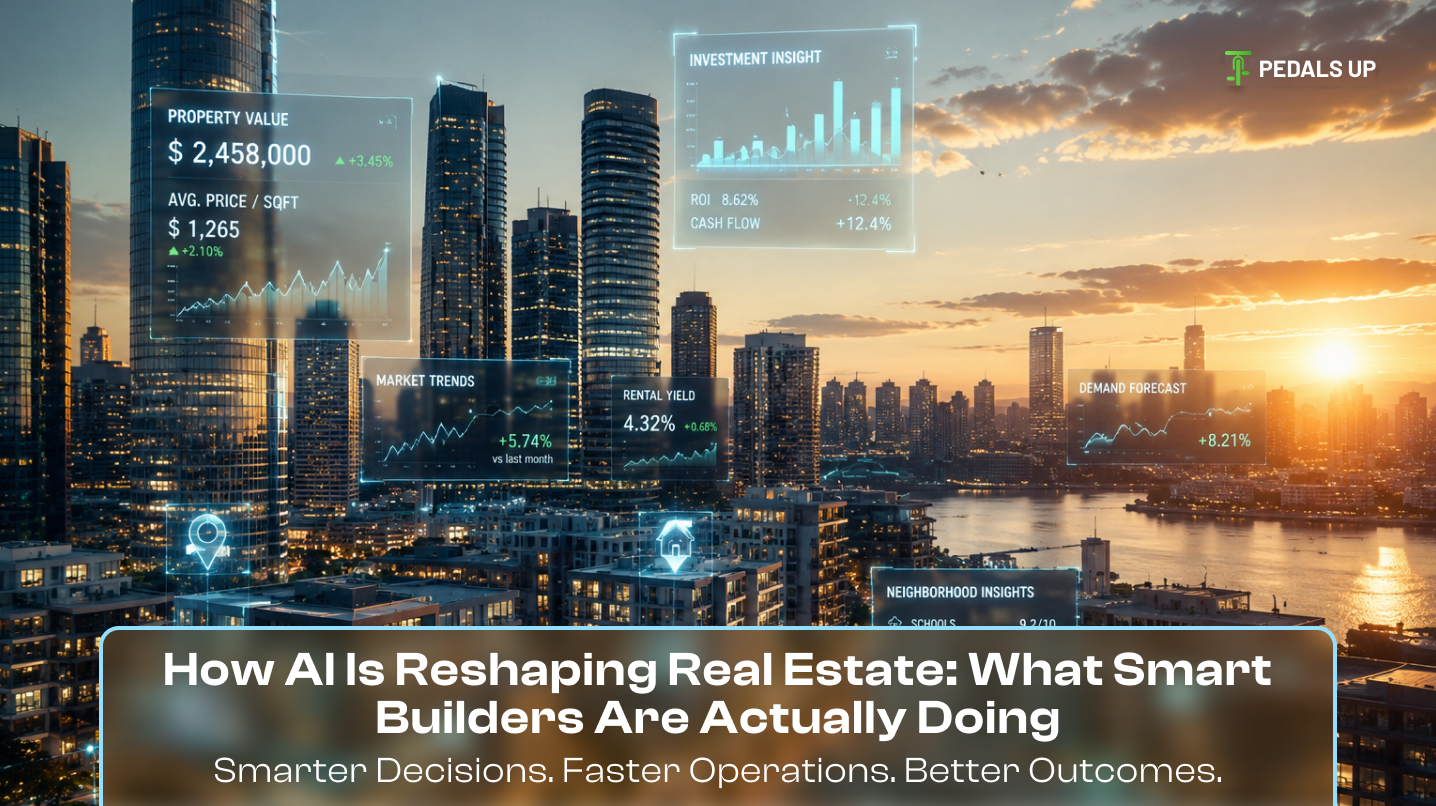
Property valuation got better data, not just a new label
Automated valuation models aren’t new. What changed is what feeds them.
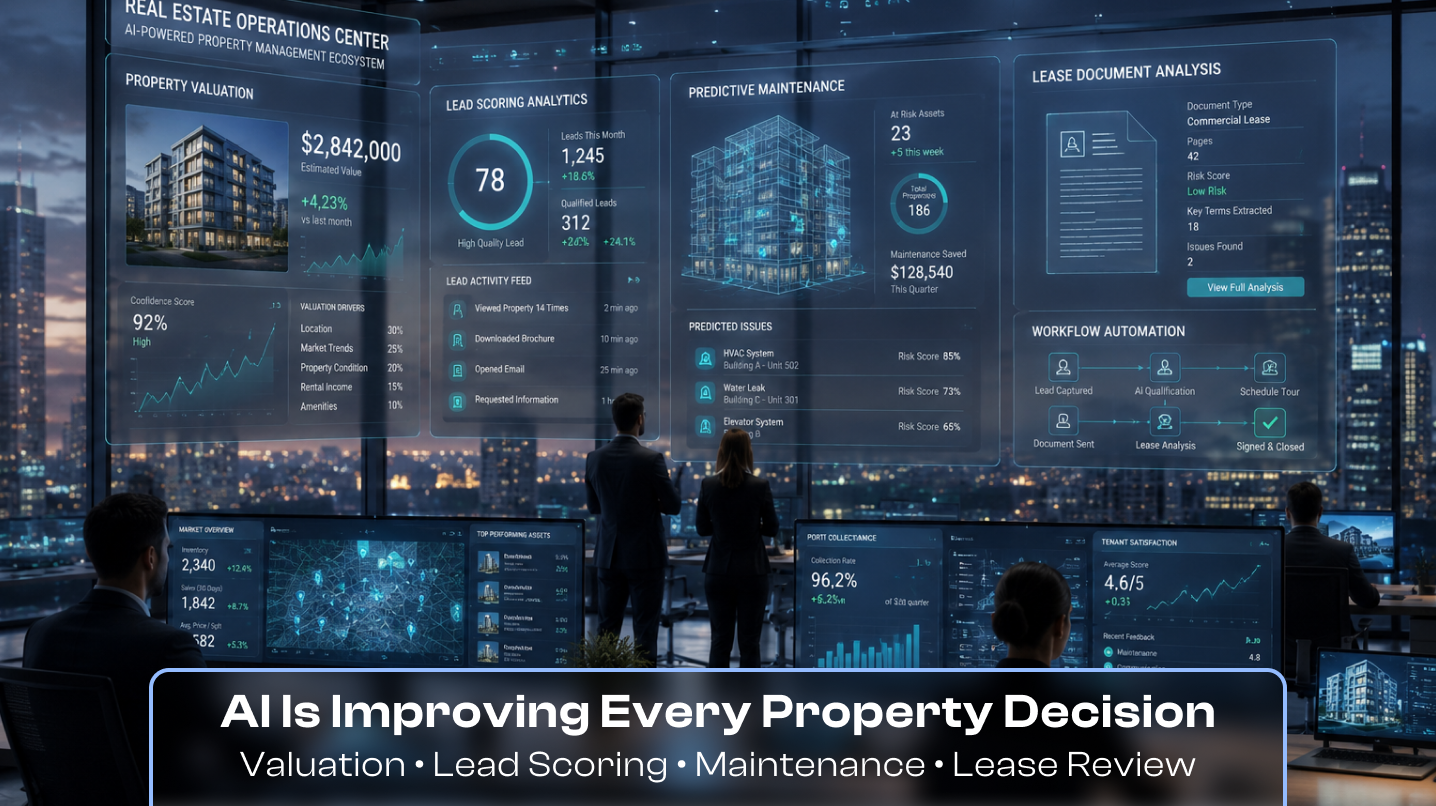
Older AVMs leaned on comps, square footage, and zip code averages. The current generation pulls in permit records, school ratings, commute times, flood zone data, even local sentiment scraped from neighborhood forums.
Zillow’s Zestimate is the example most people know, and it earned that recognition by getting close to market intuition without a human in the loop. The more useful work is happening one layer down, where brokers and investors run their own valuation logic on top of a base model, weighted however they actually price risk.
Lead qualification that stops wasting sales time
Sales teams burn hours chasing leads that were never going to close. The signal that tells you who’s serious is usually there. It’s just buried in browsing behavior nobody has time to track by hand.
AI scoring tools watch listing views, email opens, response speed, repeat visits. Someone who looked at the same property fourteen times this week and opened every follow-up is a different lead than someone who clicked once from an ad and vanished.
Structurely built its product around exactly this: an AI assistant runs the first round of qualifying conversation before a human agent ever picks up the phone.
Predictive maintenance changes the cost structure
Property managers are reactive by default. Tenant calls about a dead HVAC unit, manager scrambles for a vendor, three days pass before anyone shows up. The tenant’s annoyed and the repair costs more than it would have if it had been caught early.
Sensors that track HVAC cycling, water pressure, or unusual energy draw can flag a likely failure weeks out. Catch two or three of those early per quarter across a 200-unit portfolio and the savings show up directly in the maintenance line.
Contract review catches what tired humans miss
A 40-page commercial lease can hide one clause that changes the entire economics of a deal. AI document tools now parse leases against standard templates and flag anything unusual in minutes. The time saved is nice. The bigger win is catching the clause a reviewer would have skimmed past at 11pm on a Friday.
What companies keep getting wrong
The same mistake shows up over and over. A company gets excited about AI, buys a tool, and drops it into a workflow that was already broken. Six months later the tool sits half used and nobody can point to an ROI.
The tool wasn’t the problem. The workflow was, and making a broken process faster just produces broken decisions faster.
Before adopting anything, ask what decision you’re trying to speed up and whether the logic behind it still holds at higher speed. If your qualification criteria are wrong, an AI that qualifies leads quickly just multiplies the mistake.
Build versus buy
Early-stage proptech founders default to buying because it feels faster. Larger firms default to waiting on their existing vendor because it feels safer. Both instincts are often wrong.
Buying makes sense when the problem is generic and the data requirements are shallow, like basic lead scoring or a chat assistant. Building makes sense when your data is proprietary or your workflow doesn’t map cleanly onto a generic model.
A commercial real estate platform sitting on fifteen years of proprietary deal data shouldn’t plug in a generic valuation API. That dataset is a competitive asset. Training a model on it directly is the right call.
Getting this decision right takes someone who understands the technical tradeoffs and the business context behind them. The team at Pedals Up works on exactly this kind of product strategy for real estate and proptech companies.
The compliance problem most teams ignore until it costs them
Real estate sits at the intersection of financial data, personal data, and property data, so fair housing law applies the moment a model touches screening, lending, or pricing. The Fair Housing Act creates real legal exposure for any model using a proxy for race, nationality, or religion, even by accident.
A model trained on historical approval data absorbs whatever bias was already in those decisions. It isn’t choosing to discriminate. It’s optimizing for whatever pattern worked before, and that pattern wasn’t always fair.
HUD has issued specific guidance on algorithmic screening tools in tenant selection. The CFPB has flagged automated underwriting as something it actively monitors. Any system touching screening, lending, or pricing needs a compliance review built in from the start, not added after launch. HUD’s fair housing guidance is a reasonable place to start: hud.gov/program_offices/fair_housing_equal_opp.
What the next two years look like
AI replacing agents makes a good headline and misses what’s actually happening. The real shift is capability expansion at the individual level. An agent with good tooling runs a bigger pipeline, prices more accurately, and responds faster than one without it. The gap between strong performers and average ones is going to widen, not because the top ones got smarter, but because they’re better equipped.
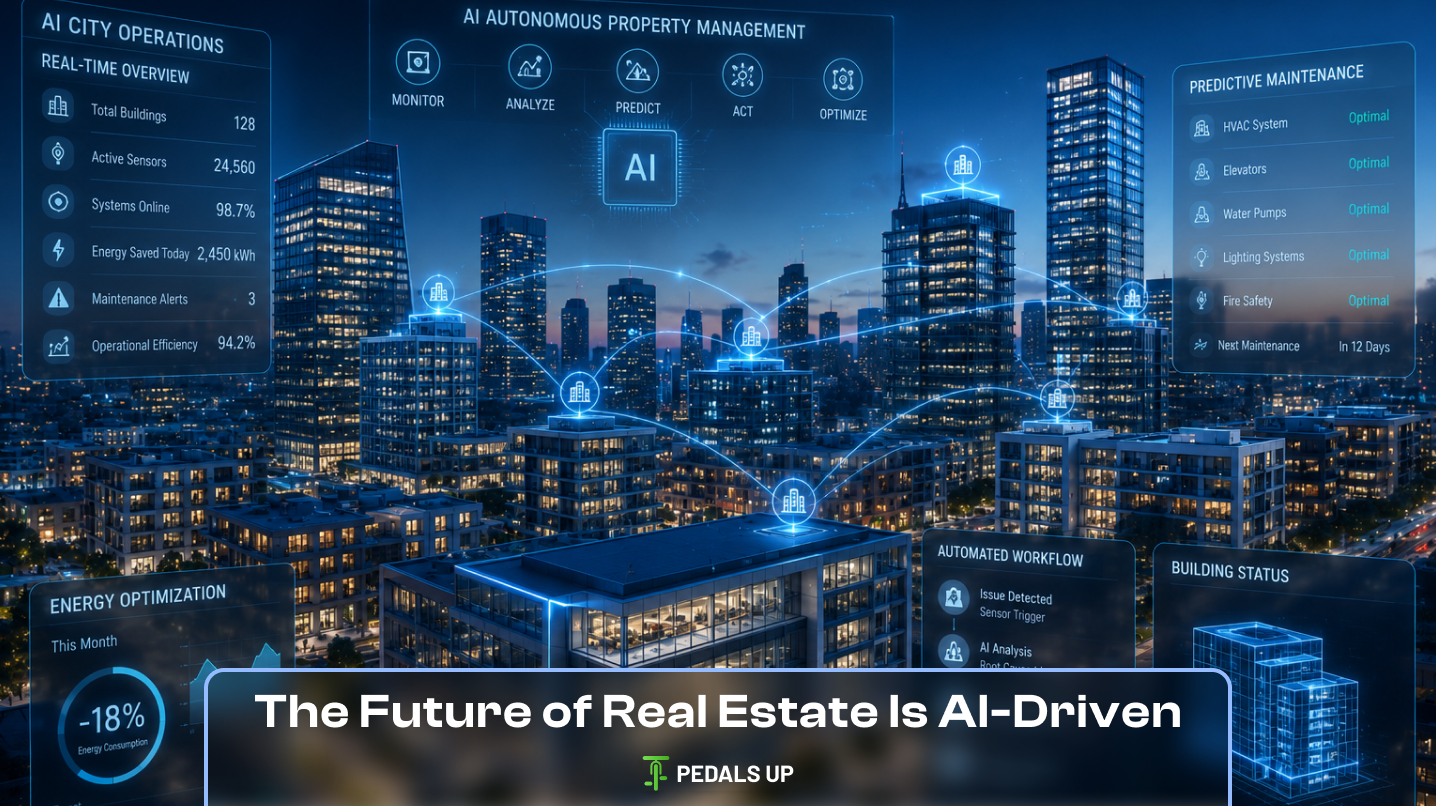
On the operations side, the interesting development is agentic workflows in property management: a system detects a maintenance issue, finds a qualified vendor, generates the work order, and dispatches it without anyone touching a phone. A handful of larger property management firms already run this in production.
Whoever builds this infrastructure now will have a cost advantage in three years that’s genuinely hard for competitors to close.
The takeaway
AI in real estate is past the proof of concept stage. The open question for most companies isn’t whether it works. It’s whether the data, the workflow clarity, and the execution exist to use it well.
If you’re building a real estate product or modernizing operations with AI and want a development partner who knows both the technical and business sides of this, let’s talk: pedalsup.com/our-services
Frequently Asked Questions
What is AI in real estate?
AI in real estate means using machine learning, natural language processing, and data modeling to automate or improve decisions across property valuation, lead qualification, lease management, predictive maintenance, and transaction processing.
How is AI used in property valuation?
Modern valuation tools go beyond comps. They factor in permit history, school ratings, commute patterns, environmental risk, and local market sentiment to produce more accurate, dynamic estimates.
Can AI replace real estate agents?
Not anytime soon. AI changes how much a skilled agent can handle and how fast. The advisory and relationship side still needs a person. AI handles the volume and pattern recognition underneath it.
What are the risks of AI in real estate?
Mostly compliance. Models trained on historical data can carry forward existing discrimination in tenant screening or lending. Fair housing rules apply to algorithmic tools, so compliance has to be built in during development, not added after.
How do proptech startups decide whether to build or buy AI tools?
Generic problems with shallow data needs usually favor buying. If your data is proprietary and your workflow is genuinely different from what a generic tool assumes, building a custom model usually produces a better result and a stronger competitive position.
What does an AI implementation in real estate typically involve?
Defining the decision you’re trying to automate, checking the data quality available to feed the model, choosing or building the right tool, integrating it into existing workflows, and monitoring it afterward for drift or unexpected output.