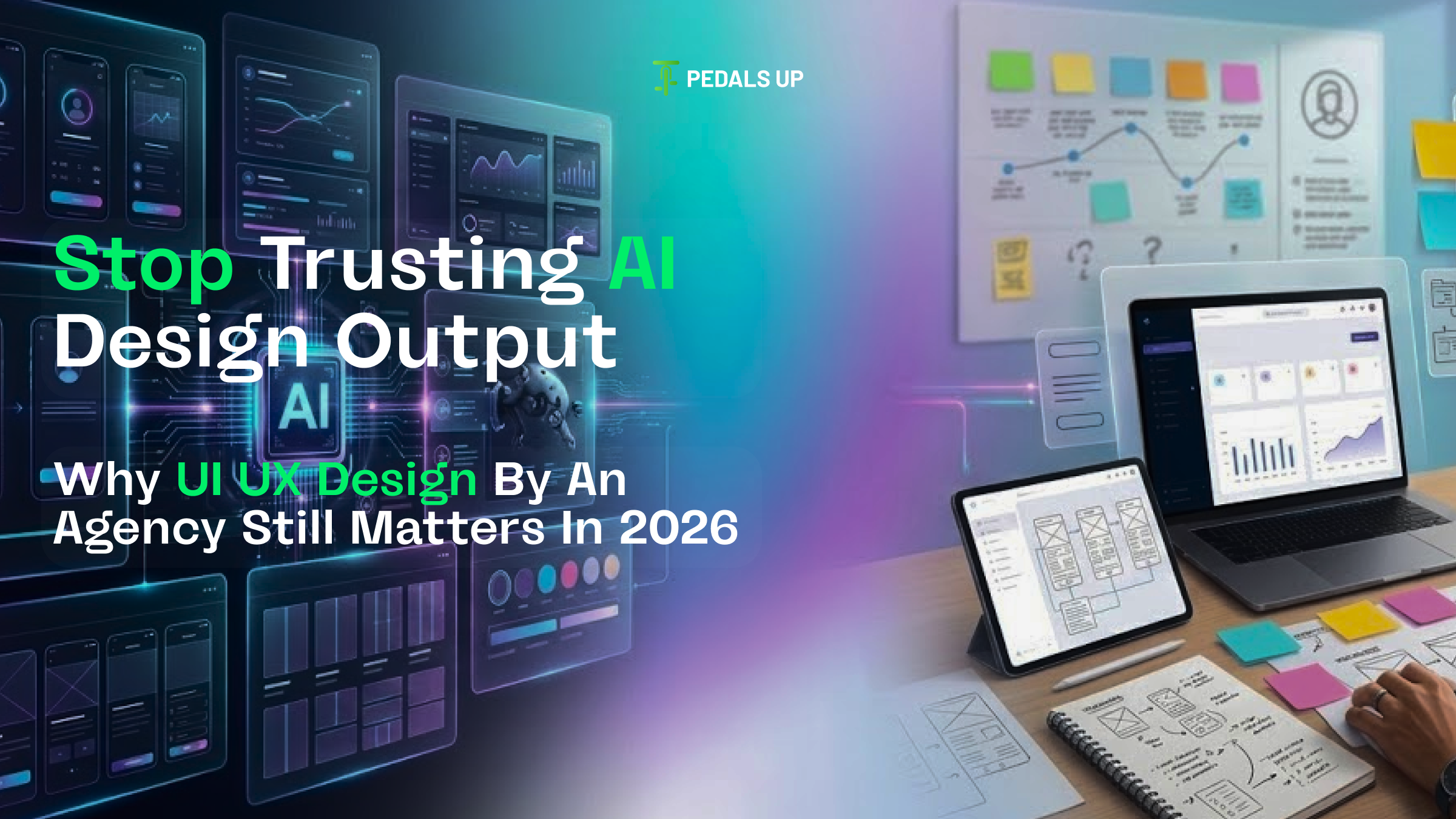
AI design tools are everywhere right now.
Platforms like Figma plugins, generative tools such as Midjourney, and interface builders like Uizard promise to generate entire app interfaces within seconds.
The pitch sounds irresistible.
Upload a prompt.
Generate a UI.
Ship a product.
But here’s the uncomfortable truth many teams are discovering the hard way: AI-generated design is often visually impressive yet structurally broken.
Great products are not just designed. They are researched, tested, refined, and strategically built around real user behavior.
That is where experienced UI UX agencies still outperform automated tools.
The Illusion of AI Design Speed
AI tools are extremely good at producing visual layouts quickly.
But speed alone does not create usable products.
Most AI-generated interfaces suffer from three core issues:
- They copy patterns instead of understanding context
- They lack user research
- They ignore product strategy
The result is something that looks polished but fails when real users interact with it.
A checkout flow might look beautiful but require too many steps.
An onboarding screen may look minimal but fail to communicate value.
Design is not decoration. It is decision making.
AI Designs for Screens. Agencies Design for Users
AI models generate designs based on training data. They recognize patterns across millions of UI screenshots.
But they cannot answer critical questions like:
- Who is the primary user?
- What is the user’s biggest frustration?
- What action defines success for the product?
This is where UX research becomes essential.
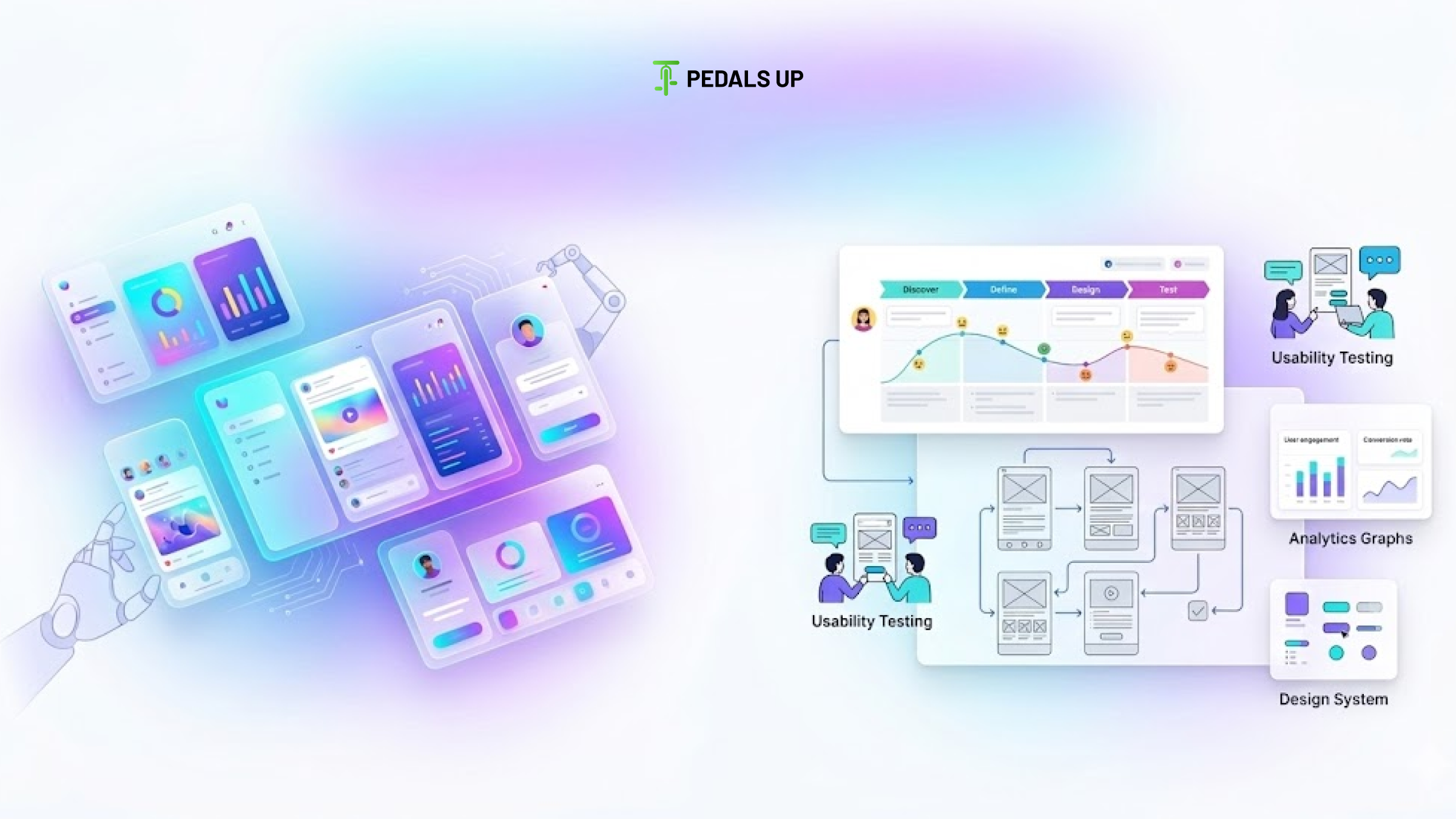
A design agency conducts:
- User interviews
- Behavioral analysis
- Competitor research
- usability testing
Companies like Airbnb famously invest in deep UX research before launching new features.
That level of product understanding cannot be automated through prompts.
The Real Risk of AI Generated UX
The biggest danger with AI-generated UI is not that it looks bad.
It is that it looks good enough to fool teams into thinking the product is ready.
But hidden issues often emerge later:
1 Poor onboarding experience
Users abandon apps quickly if the onboarding does not clearly communicate value.
2 Broken user flows
AI often creates disconnected screens without thinking about full user journeys.
3 Inconsistent design systems
Generated layouts may not scale across multiple screens or features.
4 Accessibility problems
Accessibility requirements like contrast ratios, screen reader compatibility, and navigation logic are rarely handled correctly by AI tools.
These problems usually surface after development begins, making them far more expensive to fix.
UI UX Design Is Strategic, Not Just Visual
A professional design agency approaches UX very differently.
Instead of asking, “What should this screen look like?” they ask:
- What problem does the product solve?
- What behavior should the interface encourage?
- What friction needs to be removed?
Good design reduces cognitive load and helps users complete tasks faster.
Take the example of Uber.
The interface appears simple, but behind that simplicity is deep product thinking:
- Minimal steps to request a ride
- Real-time map interaction
- Clear pricing visibility
- Seamless payment integration
This kind of product clarity comes from strategic design thinking, not automated layout generation.
Case Study: Why Design Thinking Beats AI Layouts
A well-known example of UX-driven product transformation comes from Dropbox.
Early versions of the product struggled with adoption because users did not immediately understand how file syncing worked.
Instead of simply redesigning the interface visually, the company reworked the entire onboarding experience to explain value clearly.
The result was dramatic growth in user adoption.
This shows an important truth.
UX success often comes from solving communication and behavior problems, not from prettier screens.
AI tools rarely identify these deeper issues.
Product Complexity Requires Human Thinking
Modern digital products are complex ecosystems.
A single app may involve:
- Mobile interfaces
- Web dashboards
- Backend workflows
- Payment flows
- Notification systems
- AI integrations
Each of these pieces must work together seamlessly.
Designing this ecosystem requires systems thinking.
Design agencies create:
- Design systems
- Interaction frameworks
- Scalable component libraries
This ensures the product can evolve without creating inconsistent experiences.
AI design generators typically produce isolated screens rather than scalable product systems.
AI Is a Tool. Not a Designer
AI design tools are not useless.
In fact, they are becoming valuable assistants for designers.
Agencies use AI to:
- Generate early concept variations
- Explore visual styles faster
- Create placeholder assets
- Speed up wireframing
But the final product design still requires human oversight.
AI accelerates creativity. It does not replace product thinking.
The best teams combine AI efficiency with human UX expertise.
Why Businesses Are Still Choosing UI UX Agencies
Despite the rise of AI tools, companies continue to invest in design agencies for several reasons.
1 Product strategy
Agencies align design with business goals.
2 User-centered design
Real user research drives decisions.
3 Scalable design systems
Products grow without losing consistency.
4 Faster development cycles
Clear UX reduces engineering confusion.
5 Higher product adoption
Better experiences lead to better retention.
When UX is done right, it directly impacts revenue.
The Cost of Bad UX Is Much Higher Than the Cost of Good Design
According to research from Forrester Research, every dollar invested in UX can return up to 100 dollars in value through increased conversions and customer retention.
Poor UX creates:
- Higher churn
- Negative reviews
- Increased support costs
- Lower conversion rates
This is why successful companies treat UX design as a business investment rather than a cosmetic improvement.
The Future of Design Is Human + AI
AI will absolutely change the design industry.
But the future is not AI replacing designers.
It is designers working with AI tools to move faster and explore more ideas.
The winning teams will be those that combine:
- human empathy
- product thinking
- AI-assisted design workflows
That combination produces both speed and quality.
Conclusion
AI-generated design can produce attractive screens quickly.
But great digital products require far more than good looking interfaces.
They require:
- deep user research
- thoughtful UX strategy
- scalable design systems
- clear product thinking
Relying entirely on AI design output can create hidden usability issues that only surface after development begins.
Working with a professional UI UX design agency ensures your product is designed not just to look good, but to work flawlessly for real users.
At Pedals Up, we combine product strategy, UX research, and modern design systems to help companies build digital products that users actually love to use.
If you are building a new platform or redesigning an existing product, investing in the right UX foundation will save time, reduce development friction, and dramatically improve product adoption.