Introduction
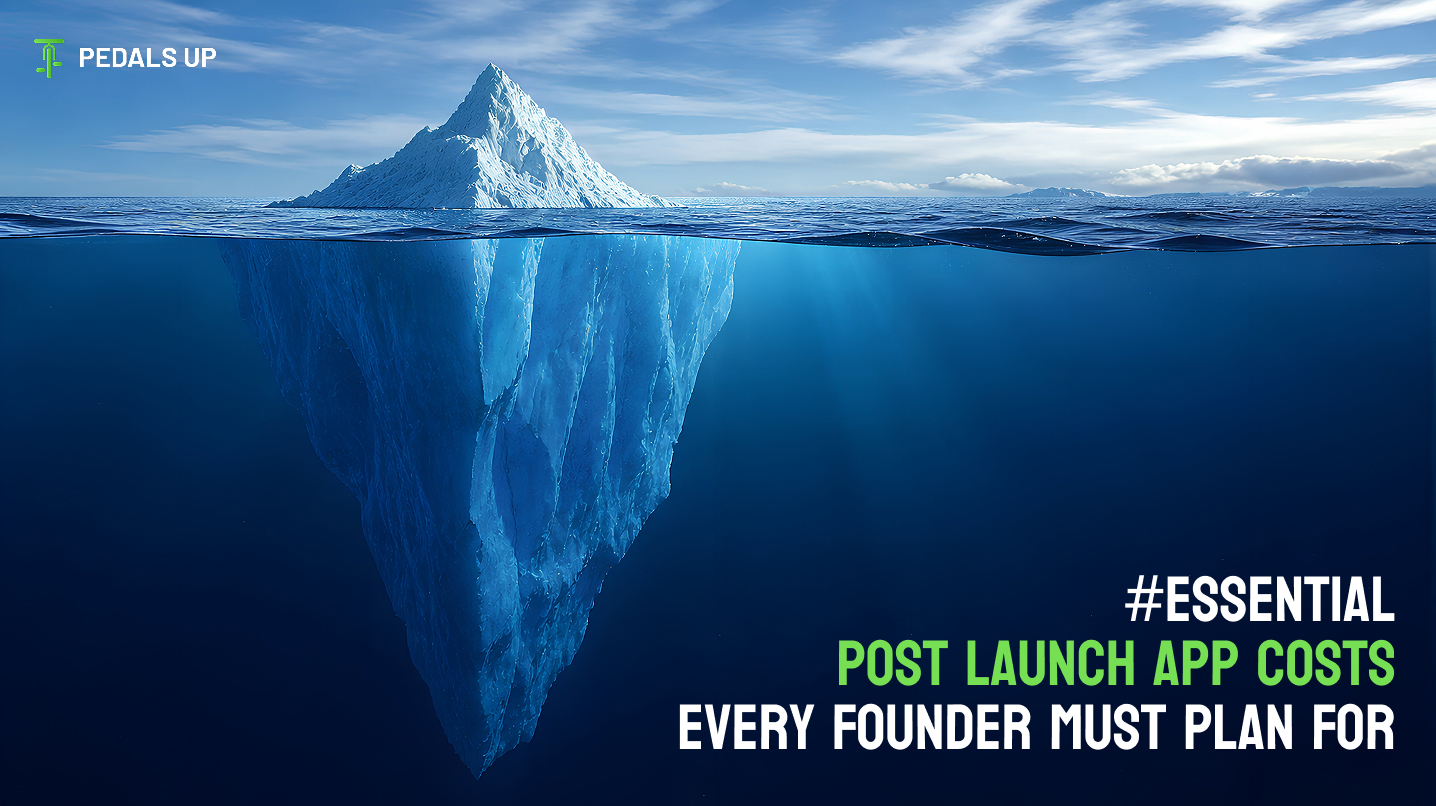
Most apps do not fail at launch. They fail after. This breakdown explains the real post launch app costs founders and CTOs face, why they escalate, and how to plan for them without losing control of your product or budget.
Post launch app costs are where most product plans quietly break.
Not because teams do not expect them. Because they underestimate how fast they compound.
You budget for development. You push to ship. Then real users show up. Costs start behaving differently. Infrastructure scales unpredictably. APIs bill on usage. Bugs appear in environments you never tested.
At that point, you are no longer building a product. You are running one. That shift is where most financial assumptions fail.
What Post Launch App Costs Actually Mean
Post launch app costs include every recurring expense required to keep an app running, secure, and competitive after release. This is not maintenance in the passive sense. It is continuous operational investment.
It includes:
- Infrastructure and hosting
- Bug fixes and stabilization
- OS and platform updates
- Third party service fees
- Security and monitoring
- Ongoing feature development
The mistake is treating these as optional or secondary. They are not. They define whether your product survives beyond its first version.
Why These Costs Escalate Faster Than Expected
Software does not operate in a stable environment. Everything around it changes.
- Operating systems update
- User behavior evolves
- Third party services change pricing or APIs
- Traffic fluctuates based on growth or marketing
Each of these creates a cost event. The non obvious part is this: most of these costs scale non linearly. A small increase in users can create a disproportionate increase in cost if your architecture or vendor choices are not optimized. That is why two apps with the same user base can have completely different operating costs.
The Core Cost Drivers After Launch
1. Infrastructure and Hosting
This is the most visible cost, and the most misunderstood. Cloud platforms like AWS, Google Cloud, and Azure charge based on consumption: compute, storage, bandwidth, database queries.
At low scale, costs look manageable. At growth stages, they behave differently. A spike in traffic or inefficient database queries can multiply your bill quickly. The key issue is not pricing. It is predictability. If you do not model usage scenarios before launch, you are reacting after costs appear.
The US National Institute of Standards and Technology defines measured service as a core characteristic of cloud computing in NIST SP 800-145. Billing is always tied to usage. There is no fixed cost safety net in cloud infrastructure.
2. Post Launch Stabilization
No matter how strong your QA is, real users will find issues. Different devices, different networks, unexpected usage patterns. This phase typically lasts the first 60 to 90 days.
Teams often treat bugs as exceptions. In reality, they are part of the launch cycle. If you do not allocate budget and time for stabilization, you end up prioritizing fixes reactively. That slows down roadmap execution and frustrates early users.
3. OS and Platform Updates
Apple and Google release major updates every year. Each update introduces API changes, permission updates, performance expectations, and compliance requirements. Ignoring these is not an option. Apps that fall behind risk store penalties or removal. Apple has historically cleaned up outdated apps from the App Store in large batches.
The tradeoff is simple. Continuous updates cost less but require discipline. Delayed updates cost more and create operational risk. Most teams choose the second without realizing it.
4. Third Party Services and APIs
Modern apps rely heavily on external services: payments through Stripe, messaging through Twilio, analytics through Firebase, maps through Mapbox. These services are efficient early on. They reduce build time. But they introduce a different risk: cost scales with usage.
A service that costs a few hundred dollars a month at low scale can reach thousands as user activity grows. The deeper issue is lock in. Switching providers later is rarely simple. It involves engineering effort, data migration, and potential downtime. This is where early architectural decisions have long term financial impact.
5. Security and Monitoring
Security is often treated as a compliance checkbox. It is not. It is an ongoing cost layer that includes monitoring tools, error tracking, vulnerability scanning, and periodic audits. Tools like Sentry or Datadog are not optional once you have real users.
The risk is not just technical. It is reputational and legal. A breach triggers user trust loss, legal exposure, and operational disruption. Compared to that, regular security investment is predictable and controlled.
6. Feature Development and Iteration
This is the largest and most strategic cost. The product you launch is not the product users will need a year later. Competitors evolve. User expectations shift. New opportunities appear.
If you stop investing in features, the product stagnates. The mistake is treating feature development as optional after launch. In reality, it is the primary driver of retention and growth.
A Real World Pattern Most Teams Experience

Look at how companies like Netflix approach post launch operations. They do not treat infrastructure, monitoring, or iteration as support functions. They treat them as core product layers. Their engineering culture focuses on observability, resilience, and continuous deployment.
Why? Because at scale, stability and iteration speed define user experience as much as features do. Even at a smaller scale, the pattern holds. Apps that invest early in operational clarity tend to scale smoother. Apps that delay it spend more fixing problems later.
The Biggest Budgeting Mistake
Most teams combine everything into one line item called maintenance. This creates a hidden problem. Maintenance competes with feature development for budget. And feature work almost always wins.
That leads to deferred updates, growing technical debt, increasing cost of fixes, and slower future development. The better approach is to split costs into three clear buckets:
- Operational maintenance
- Security and compliance
- Product development
Each has different priorities and consequences. Treating them separately creates better decisions.
How to Think About Costs Before You Launch
If you want control after launch, the work starts before launch. A few practical ways to approach it:
- Model infrastructure at multiple growth levels, not just launch traffic
- Understand pricing tiers of third party services before committing
- Allocate a stabilization budget for the first 90 days
- Plan OS updates as a recurring cycle, not a future task
- Set a baseline for security investment early
- Separate budgets for maintenance and product growth
This is not about reducing cost. It is about making cost predictable.
Building With Long Term Cost in Mind
This is where development partners matter. If your product is built only for launch, you inherit problems later. If it is built with operational thinking, you gain control. That includes choosing the right architecture early, designing for scalability, planning integrations with cost awareness, and structuring ongoing support models.
If you are evaluating how to approach this, it is worth looking at how teams structure long term product development through partners like Pedals Up. The difference is not just in delivery. It is in how the product behaves after launch.
Conclusion
Post launch app costs are not a side consideration. They are the real cost of running a product. The build gets you to market. Operations determine whether you stay there.
Most teams underestimate this shift. The ones that plan for it early move faster, spend smarter, and avoid painful corrections later.
The question is not whether these costs exist. It is whether you control them or react to them.
Planning a product or already running one?
If you want clarity on your actual cost structure before the next scaling phase hits, let us have that conversation now. Talk to Pedals
Frequently Asked Questions
What are post launch app costs?
Post launch app costs are all recurring and ongoing expenses that begin after an app goes live. They include server hosting, bug fixes, OS compatibility updates, third party API fees, security monitoring, and continued feature development. These are operational costs that run indefinitely, not one time project expenses.
How much does it cost to maintain an app after launch?
App maintenance typically costs between 15 and 20 percent of the original development cost per year. A $100,000 app should carry a $15,000 to $20,000 annual maintenance budget as a starting point. This figure increases for apps in regulated industries, products with rapid user growth, or codebases with accumulated technical debt.
Why do app running costs increase over time?
App running costs increase because the environment software operates in constantly changes. OS updates require compatibility work. Third party services raise prices or deprecate APIs. User growth increases infrastructure consumption. Each of these creates a new cost event, and deferred responses compound into larger expenses later.
What happens if you do not budget for post launch app costs?
Without a post launch budget, teams end up reacting to costs rather than controlling them. Maintenance gets deferred in favor of features. Technical debt accumulates. OS updates get skipped. Security vulnerabilities go unpatched. Each deferral increases the eventual cost of addressing the problem.
What is the biggest post launch cost for most apps?
For most apps, ongoing feature development is the largest post launch cost. Infrastructure and third party fees are more predictable and relatively bounded. Feature development scales with competitive pressure and user expectations, making it the most variable and strategically significant cost category after launch.
How should a founder budget for post launch app development costs?
Split post launch costs into three separate budget lines: operational maintenance at roughly 15 to 20 percent of development cost annually, a stabilization reserve of around 10 percent of development cost for the first 90 days, and a product roadmap budget tied to planned feature development. Keeping these separate prevents maintenance from being deprioritized in favor of new features.