Table of contents
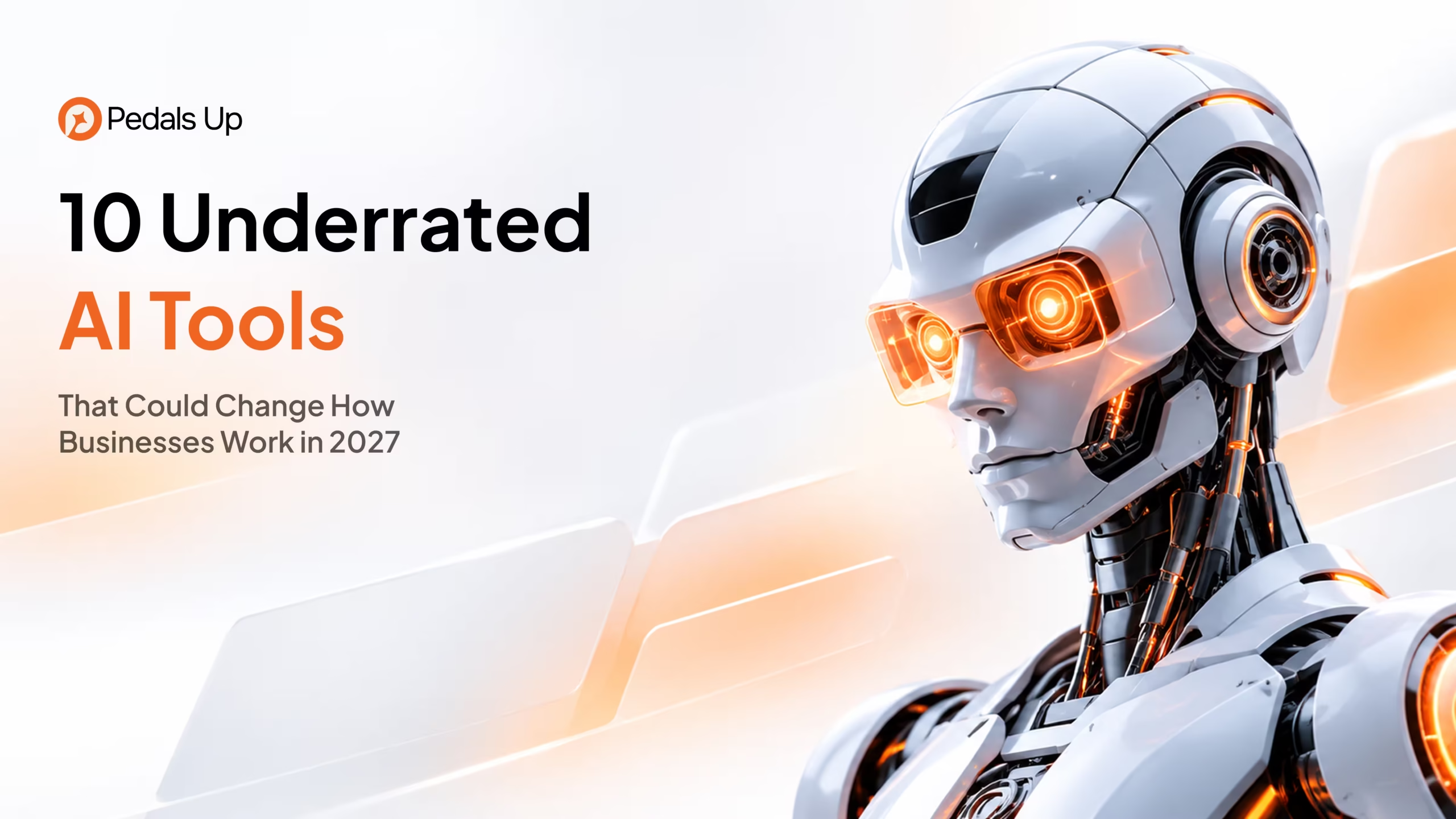
10 Underrated AI Tools That Could Change How Businesses Work in 2027
The next useful AI product your company adopts may not be another chatbot. It might be software that prepares proposals, reviews code, retrieves information from supplier websites, or explains why an AI assistant gave a customer the wrong answer.
That is why underrated AI tools deserve attention. Rather than competing to answer every question, specialized products address work that already consumes time, money, and engineering capacity. Some are building blocks for products that need careful integration.
These ten tools are worth evaluating over the next six months. Their value lies in the problems they tackle, and in what those problems reveal about the next stage of business AI.
1. Gumloop: Automating Research That Crosses Applications
Gumloop combines AI steps, application integrations, and a visual workflow builder. It is designed for processes where people do more than transfer data: they read, classify, summarize, and decide what happens next.
Imagine a sales team receiving inquiries from several channels. Gumloop could research prospects and prepare CRM records without requiring a bespoke application.
The weakness is that an AI classification can be wrong while the workflow continues successfully. Teams need sampling, error handling, and clear ownership of the resulting records. Automation should not turn an uncertain answer into an unquestioned fact.
Best for: Sales operations, marketing research, and information-heavy back-office work.
2. Relay.app: Putting Approval Where Automation Needs It
Relay.app combines workflow automation with human approval and input steps. That matters because the most expensive automation errors often involve decisions rather than data movement.
Consider a hypothetical refund workflow. Software gathers the purchase history, checks policy conditions, and recommends a response. A manager approves an exception before money moves. Routine cases can progress quickly while consequential decisions retain accountability.
The design challenge is deciding which steps actually deserve review. Start with financial thresholds, unusual cases, and actions that are difficult to reverse.
Best for: Finance, support, HR, and other approval-dependent operations.
3. Stagehand: Building Agents That Work Inside Browsers
Not every supplier portal or legacy business application offers a useful API. Employees still log in, navigate pages, retrieve reports, and enter information manually.
Stagehand, an open-source browser automation SDK from Browserbase, lets developers combine conventional browser controls with AI-assisted actions and extraction. A logistics company could investigate using it to retrieve shipment updates from authorized portals, for example.
Developers must respect access rules, protect credentials, and verify consequential actions. Browser automation is not a substitute for a stable API when one is available.
Best for: Engineering teams dealing with browser-dependent workflows.
4. Firecrawl: Feeding AI Applications Current Web Information
A model cannot reliably answer questions about changing products, regulations, or competitor documentation without access to relevant sources. Firecrawl helps developers retrieve and convert website content into formats that AI applications can process.
A product intelligence service might use it to collect publicly available documentation and identify changes for analysts to verify. That is a different proposition from asking a general chatbot to recall information from training.
Yet clean extraction is not the same as trustworthy data. Teams need source attribution, refresh policies, and checks before extracted material influences customer-facing decisions.
Best for: Research products, knowledge applications, and external-data pipelines.
5. Dust: Connecting AI Agents to Company Knowledge
Internal information is scattered across documents, conversations, and business applications. Employees often know an answer exists but cannot find the latest approved version.
Dust allows organizations to create AI agents connected to workplace knowledge and workflows. A customer success team could use one to locate documentation and prepare a response based on relevant internal material, with an employee checking the result before sending.
The challenge is preserving permissions, resolving conflicting documents, and showing where an answer came from. If an agent can retrieve information a user should not see, the productivity gain is irrelevant.
Best for: Organizations with fragmented internal knowledge and repeated information requests.
6. Quiip.ai: Managing the Work Behind a Business Proposal
Proposal writing is often treated as a document problem. In practice, the work includes understanding a client’s requirements, defining scope, coordinating reviews, clarifying commercial terms, and following up after delivery.
Quiip.ai uses a guided brief to generate client-specific proposal drafts. Its workflow also covers editing, collaboration, approvals, client conversations, delivery tracking, reminders, and electronic signatures. It offers a free platform with custom branding, making it relevant to smaller teams as well as established service businesses.
For a software agency preparing several proposals each week, the appeal is not simply faster writing. It is keeping the commercial conversation and internal review connected to the proposal itself.
The limitation is important: generated scope, prices, timelines, and legal language still require human verification. A polished proposal with an inaccurate commitment can cost far more than the time saved drafting it.
Best for: Agencies, consultants, freelancers, and business development teams.
7. Vapi: Building Voice Agents That Complete Tasks
A voice assistant becomes useful when it can do more than read a scripted answer. Vapi provides developer infrastructure for AI voice agents that handle calls and connect to external systems.
An appointment-driven business could explore an agent that gathers caller details, checks available slots through an authorized integration, and passes unusual requests to staff. This is an illustrative use case, not a claim about a particular deployment.
Voice adds failure modes that text interfaces avoid. Background noise, interruptions, accents, latency, and misunderstood consent can disrupt a conversation. Businesses need clear disclosure, call handling policies, and dependable escalation to a person.
Best for: Teams developing structured, high-volume voice interactions.
8. Qodo: Reviewing Code Produced With AI
Coding assistants make it easier to produce code, but they do not remove the responsibility to maintain it. More generated changes can mean more review work, especially when business logic spans multiple services.
Qodo focuses on AI-assisted code review and quality. Engineering teams can use it to inspect changes and surface potential issues before merging them into shared repositories.
Automated reviews can miss architectural weaknesses or flag harmless patterns. Security testing, integration tests, and accountable human reviewers remain necessary.
Best for: Engineering organizations increasing their use of AI coding tools.
9. Langfuse: Finding Out Why an AI Application Failed
Langfuse provides tracing, evaluation, and observability capabilities for applications built with language models.
Suppose a support assistant cites an outdated refund policy. A trace may help engineers determine whether the system retrieved the wrong document, passed incomplete context, or generated an unsupported conclusion.
But tracing can also capture sensitive prompts and documents. Retention rules, access controls, and monitoring costs need attention before production rollout.
Best for: Teams operating customer-facing assistants and multi-step AI agents.
10. Promptfoo: Testing AI Behavior Before Release
Traditional software tests often compare an input with a predictable result. AI applications also need testing for inconsistent answers, unsafe actions, and attempts to manipulate instructions.
Promptfoo helps developers evaluate model behavior and conduct security-oriented tests, including prompt-injection scenarios. A team building an internal document assistant could test whether malicious instructions embedded in retrieved content influence its responses.
Repeatable evaluations help teams detect regressions when prompts, models, or retrieval systems change.
Best for: Developers and security teams shipping business-critical AI features.
What These Tools Tell Us About AI Adoption
These products fall into two distinct groups. Gumloop, Relay.app, and Quiip.ai can address recognizable business workflows directly. Stagehand, Firecrawl, Vapi, Langfuse, and Promptfoo are often components of a larger system. Dust and Qodo sit closer to specialized team platforms.
A ready-made application may be evaluated through adoption and time saved. A developer platform also carries integration, infrastructure, maintenance, security, and support costs.
A sensible pilot therefore measures more than output speed. Track correction rates, completion rates, review effort, and the cost of handling exceptions. If a tool saves ten minutes per task but creates fifteen minutes of checking, the apparent gain disappears.
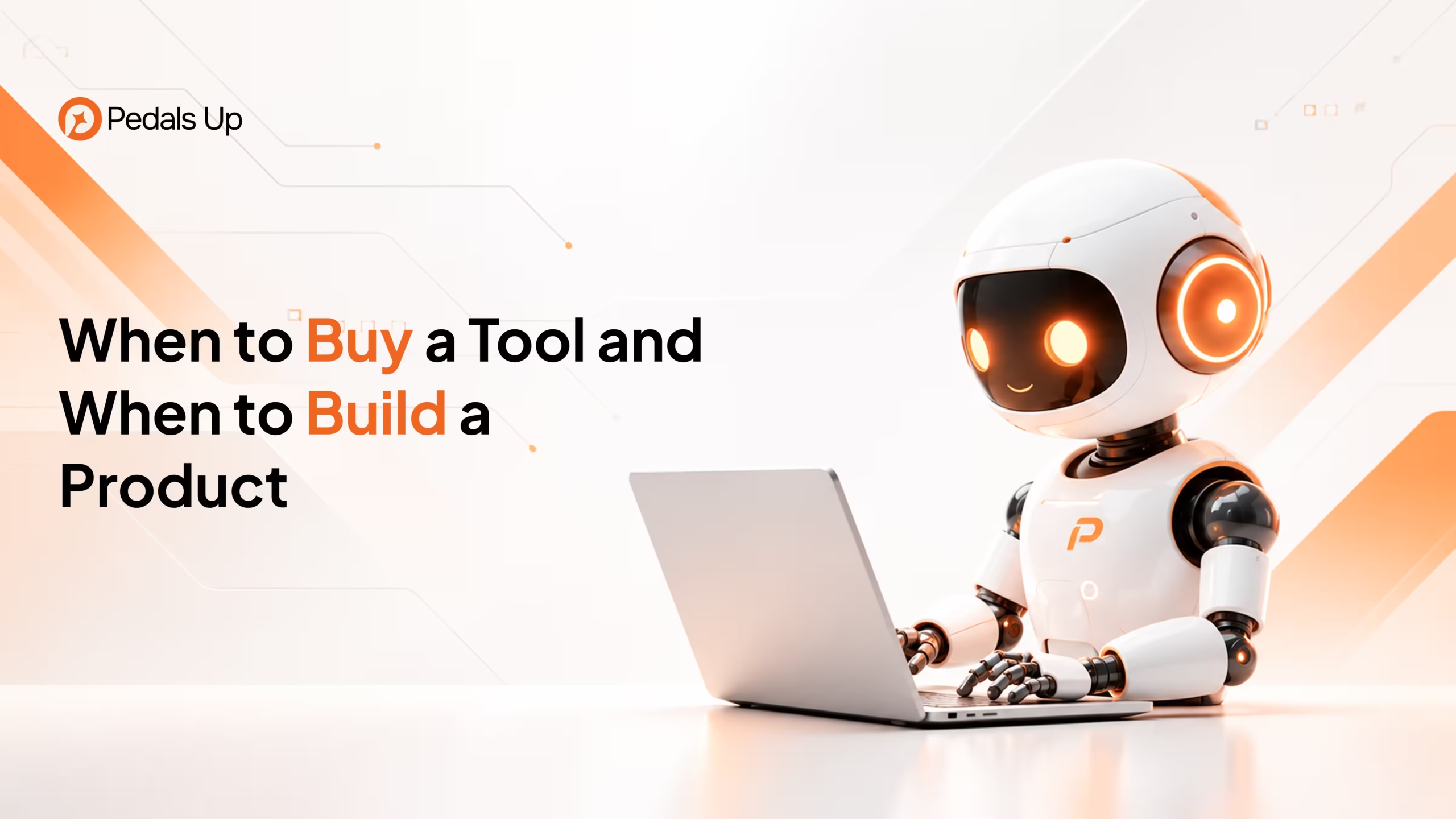
When to Buy a Tool and When to Build a Product
Buy when the workflow is common, the product meets your requirements, and integration is straightforward. Build when your advantage depends on proprietary processes, specialized data, customer experience, or controls existing products cannot provide.
Often the strongest approach combines both. A company might use Firecrawl for extraction, Langfuse for observability, and custom application logic to decide what the business should actually do with the information.
Clear permissions, human escalation, measurable quality, and reliable integrations determine whether an experiment survives real use.
The Next Opportunity May Be a Product You Build
Nobody can know which of these tools will become household names by 2027. But the problems they address are already real, and many businesses need solutions tailored to their customers and operations.
If you’re considering building an AI proposal platform, workflow agent, voice assistant, or another specialized AI product, PedalsUp can help turn the idea into working software. Explore our AI development and product engineering services to assess the product scope, technical architecture, and practical route to launch.